
Simi Valley Pool Contractor
Pool Plastering & Resurfacing
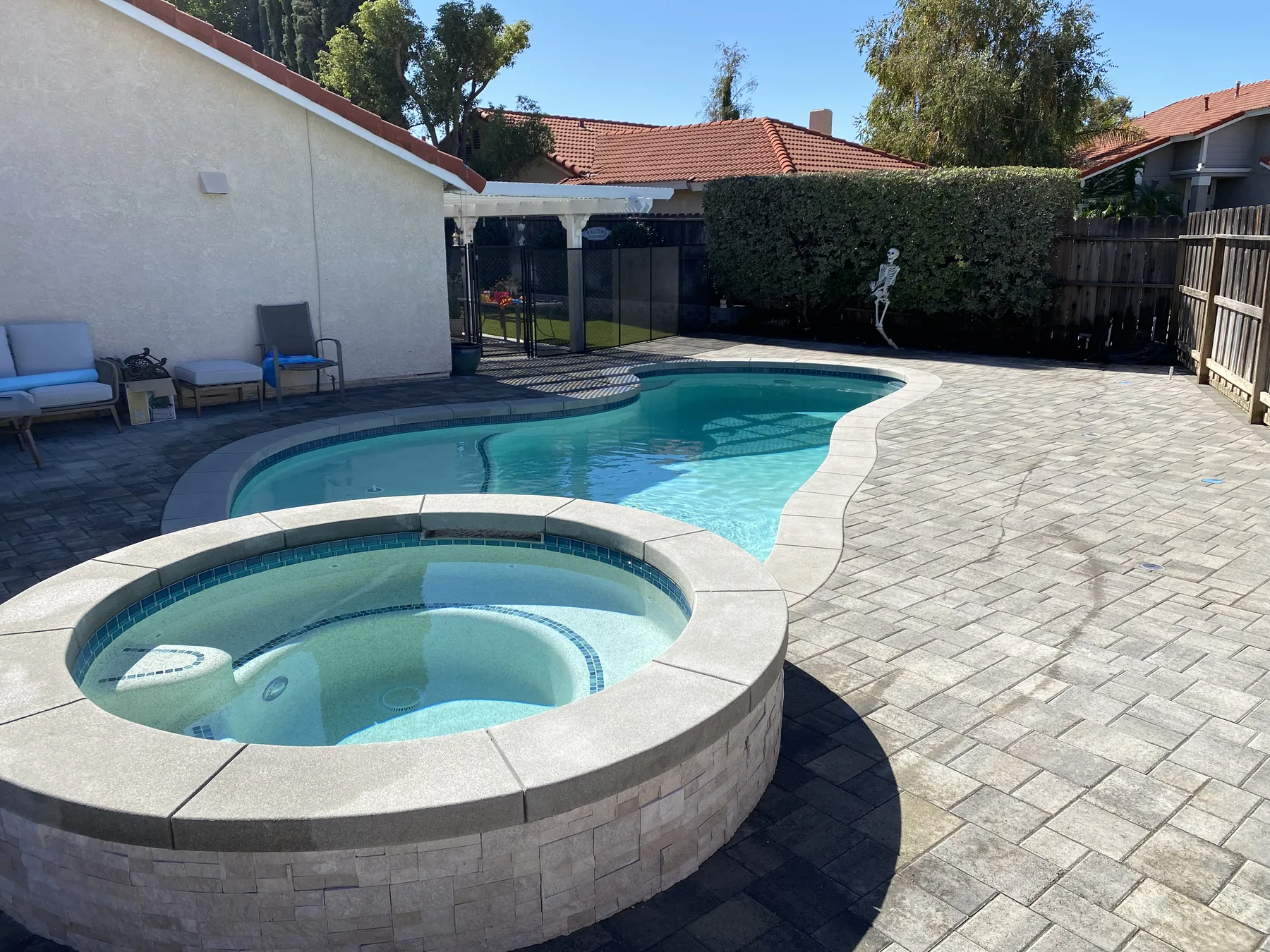
Restore your pool’s surface with durable plaster, pebble, or quartz finishes, professionally applied for a smooth, long-lasting result.
Have a question or ready to get started? Call or text (805) 866-8336 to book your free consultation for an accurate estimate.
Pool surfaces don’t last forever. Rough texture, staining, and visible etching are signs the plaster has reached the end of its life, and left too long, it can lead to leaks and bigger structural repairs.
We install marcite plaster, pebble, and quartz finishes, matched to your budget and the look you want, with proper surface prep so the new finish bonds and lasts as long as the material is capable of.
Resurfacing is also the point where many homeowners choose to upgrade their finish entirely, moving from standard white plaster to a pebble or quartz aggregate that changes both the color of the water and the feel underfoot.
We handle the full scope ourselves, from initial inspection through final water balance, rather than subcontracting out the parts of the job that determine how long your new surface actually lasts.
Why It Matters
What to Know Before You Start
The interior surface is the only layer between your pool water and the structural shell underneath it. Once that layer wears through, water chemistry starts attacking the concrete and rebar directly, which is a far more expensive problem to fix.
Rough or pitted plaster isn’t just uncomfortable to swim in, it also holds onto algae and stains more easily, meaning you’ll likely be running more chemicals and doing more manual scrubbing just to keep the water looking clean.
Getting the timing right matters. Resurfacing a plaster surface before it fully fails is meaningfully cheaper than waiting until water has gotten behind the finish and started damaging the shell.
Water chemistry across Ventura County varies somewhat by water source and household softening systems, which is one more reason we test and account for local conditions rather than applying a generic startup process to every resurface.
What's Included
Everything This Service Covers
- Full surface prep, acid washing, and bond coat application
- Marcite plaster, pebble aggregate, and quartz finish options
- Color and texture matching for a seamless, custom look
- Crack and structural repair before resurfacing
- Proper curing and startup water chemistry included
- Surface color and aggregate upgrades during resurfacing
Is It Time?
Signs You Need This Service
- The surface feels rough, gritty, or sandpaper-like against bare skin, even after brushing.
- You see gray or brown staining that doesn’t respond to shocking or stain treatment.
- Visible etching, small pits or divots in the plaster, especially in high-traffic areas like steps.
- Your plaster is more than 10 years old (marcite) or 15–20 years old (pebble/quartz).
- You’re noticing a slow, unexplained drop in water level that could indicate the surface has failed enough to let water through.
- Previous patch repairs are visible as a different color or texture than the surrounding surface.
How It Works
Our Process
- 1
Inspection
We assess the current surface condition, note any staining, etching, or roughness, and identify any structural repairs needed before resurfacing, including checking for hairline cracks that need attention first.
- 2
Drain & Prep
The pool is drained and the old surface is chipped out or acid-washed and prepped depending on the finish being applied, and the shell is cleaned and any cracks repaired.
- 3
Bond Coat
A bond coat is applied to the prepped shell to ensure the new plaster, pebble, or quartz finish adheres properly and doesn’t delaminate over time.
- 4
Apply Finish
Your selected plaster, pebble, or quartz finish is hand-applied and troweled by our crew for an even, durable surface, a process that requires timing and skill to avoid visible trowel marks or inconsistent texture.
- 5
Fill & Cure
We refill and manage the critical first-fill water chemistry, brushing and balancing on a schedule during the first two weeks, to protect your new surface during its most vulnerable curing period.
Materials & Options
What Goes Into the Work
Marcite (white plaster) is the most economical finish and has been the industry standard for decades; it typically lasts 7–12 years with good water chemistry maintenance.
Pebble finishes embed small aggregate stones into the plaster matrix, creating a textured, more slip-resistant surface that resists staining and typically lasts 15–20 years.
Quartz finishes blend quartz aggregate into the plaster for a finish that’s smoother than pebble but more durable and colorfast than standard marcite.
Color additives are available across all three finish types, letting you shift the water’s visual tone from bright blue to deeper teal or gray-green without adding a separate paint or coating.
Bond coat material and application technique matter as much as the finish itself, a poorly bonded finish can delaminate regardless of how good the surface material is.
Budgeting
What Affects the Cost
- Pool size and surface area are the primary driver of material and labor cost for any resurfacing project.
- Finish selection matters: marcite plaster is the most affordable option, while pebble and quartz finishes cost more upfront but last considerably longer.
- Any structural repair (cracks, rebar exposure) found during prep is addressed before resurfacing and is scoped separately from the standard resurfacing price.
- Color and specialty aggregate upgrades add a modest cost over standard white or gray finishes.
After Your Project
Ongoing Care & Support
The first two to three weeks after refilling are the most important for a new surface: we give you a brushing and water-balance schedule specifically for this curing window.
Avoid adding chemicals too aggressively during the first week, new plaster is more reactive to chemical shock than a surface that’s already cured, and overcorrecting early can cause staining or blotching.
Once cured, standard weekly maintenance is all a new surface needs; we’re happy to answer questions if anything looks off in those first few weeks.
Common Questions
FAQs
How long does pool plaster last?
Standard marcite plaster typically lasts 7–12 years, while pebble and quartz finishes can last 15–20+ years with proper water chemistry maintenance.
How long is the pool out of use during resurfacing?
Most resurfacing projects take about 1–2 weeks from drain to refill, depending on the finish selected and curing requirements.
Can you match the color of my existing plaster?
We can get close with standard color additives, but keep in mind that plaster color shifts slightly over time due to water chemistry, so an exact match to years-old plaster isn’t always possible.
Why does new plaster sometimes look blotchy right after filling?
This is common in the first few weeks as plaster cures underwater; it typically evens out with proper brushing and balanced water chemistry during the initial curing period.
Do you repair cracks as part of resurfacing?
Yes, any cracks or structural issues found during the inspection and prep stage are repaired before the new finish is applied.
Is pebble finish worth the extra cost over plaster?
If you’re planning to stay in the home for 10+ years, pebble or quartz finishes often work out to a similar or lower cost per year of use than repeatedly replastering with marcite.
Can you resurface a pool without draining it completely?
No, a proper resurface requires a full drain so the surface can be prepped, bonded, and finished correctly; partial-drain approaches typically compromise how well the new surface adheres.
What causes plaster to fail early?
The most common causes are poor water chemistry balance over time, inadequate surface prep during the original installation, or simply reaching the natural end of the material’s lifespan.
Can I resurface just part of my pool, like only the steps?
Generally no. Because resurfacing requires a full drain and consistent curing, it’s almost always done as a complete surface rather than a partial patch, which also avoids visible seams.
Do darker plaster colors show algae or debris more than lighter colors?
Darker finishes tend to hide staining better but can make debris more visible; lighter finishes show staining more readily but debris blends in more. It’s largely a preference call.
Explore More
Related Services
Pool & Spa Remodels
Bring an aging pool back to life with a full remodel: new surfaces, tile, decking, lighting, and modern energy-efficient equipment.
Learn more →Equipment Installation
Pumps, filters, heaters, and automation systems we build into pool remodels and new construction, for residential backyards and commercial properties.
Learn more →LED Pool Lighting
Color-changing and white LED lighting we build into pool remodels and new construction, for residential backyards and commercial properties.
Learn more →
Ready to Start Your Plastering & Resurfacing Project?
Get a free, no-pressure quote from a licensed Ventura County pool contractor. Call or text (805) 866-8336 with any questions, or to book your free consultation for an accurate estimate.